My News Happy Place, even when it’s grim

In recent weeks, I’ve found myself increasingly fleeing to The Guardian for clear thinking, fresh writing, writers with whom I have no history, and something different from the New York Times.  For a while I would drift there and, in the flurry of skipping across the surface of the internet, never had time to make connections between consistently good material and that outlet.  It wasn’t until I read Glenn Greenwald’s account of the Snowden leaks, where he favorably talks about his time with The Guardian, that I started to pay attention.

That transition ended with me subscribing (I actually wrote donating money first – how’s that for an internet era insight?) and getting a tote bag.  Twice during a weekend in the country, the tote prompted a conversation about how The Guardian has become a sanctuary, a newsy happy place.  I was reminded of this today, when I noticed how many great pieces are coming out from women and women of color with crisp, intelligent, passionate critiques of US politics.

  • A piece from a woman who was a senior Trump executive documenting his shift from being somewhat forward thinking about women (at least at the time) to the raving whatever he is today.  Probably the first piece I’ve read about Trump in months with some texture and insight into the person.
  • A terrific piece about Beyonce’s Lemonade, which I should just quote rather than characterize:  “We are the women left behind. We are the women who have cared for other women’s children while ours were taken away. We are the women who work two jobs when companies won’t hire our men. We are the women caring for grandchildren as our sons are taken by the prison industrial complex. We are the women who march in the streets and are never marched for. We are the women expected to never air our grievances in public. We are the women expected to stay loyal to our men by staying silent through abuse and infidelity. We are the women who clean the blood of our men and boys from the streets. We are the women who gather their belongings from the police station.”
  • Another great piece about Beyonce and HRC.  By a dude, but it feels fresh, doesn’t have the knowing or “I just noticed there’s more to popular music than we thought” vibe of the NYT (or me).
  • Another piece taking HRC, Sanders, and Democrats to task for making any claims to progressivism based on their record on race (correction: also by a man, forgot to flag this one).  The writer ends the piece with the clearest, sharpest, most astute summary of opting out that I’ve read:  “This is not apathy. This is not a threat. This is an acceptance that Hillary Clinton and the rest of these morally challenged politicians will politically value our black lives as much as they value our black votes when, and only when, we courageously cease being electoral accomplices in our own political death and destruction.”
  • And one other piece that attempts to unpack the US media’s portrayals of one candidate as having more African-American support (and therefore being better on race) than the other.  In this piece, even the caption is great:  “There’s no reason to doubt that black endorsements are sincere, but they’re not being used as sincerely as they’re being given.”

I can’t quite yet put my finger on the secret sauce – perhaps it’s proximity to to those who have proximity to Orwell’s blue plaque – but there’s so much voice there, I find it refreshing and inspiring.
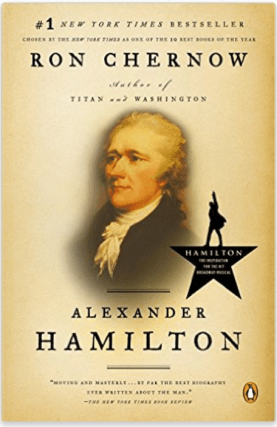
I’m just going to put this here

Screenshot 2016-04-27 09.27.45


Along with a few words . . .

I’ve gotten used to seeing Tolstoy, Flaubert, Ibsen, Woolf, and other literary greats’ book covers bearing “Now a major motion picture”, but this one caught me up short. (UPDATE:  I just remembered the previously strangest one:  seeing Hugh Grant and Andie MacDowell on the cover of a collection of Auden poems, with the banner:  “Includes “Funeral Train Blues” from Four Weddings and a Funeral””)

First, I should be clear, I love the music and the musical, and I think Miranda is an amazing talent and human being.  I should admit I listened to it not knowing anything more about Hamilton than what I learned in a two-semester American history class that touched on him.  Worse still, I totally bought the premise that his life, seen from 10,000 feet (or through musical verse), has a rising up from a ghetto to greatness through brains and pluck vibe – with all the consequences that come from going it alone.

So, having raised the issue of whether TV has cheapened the office of the President to the point where people are voting against a dangerous fantasy version of the job, I’m curious of whether I’m a hypocrite being not horrified by this?

(I also want to see how poorly you think of me, knowing that both of you have read Chernow, have intelligent thoughts about it and I just downloaded it based on the musical and am waiting for whispersync to come out before I make the commitment.)


Tacking, Trump, and the Psychic Makeover Reality Show

Tacking to the “center” for November is almost as well-understood a ritual as the balloon drop, dissing urban culture, and eating cheese steak in Philadelphia.  We’re all waiting for it. Sanders supporters are waiting to see whether HRC tacks to the comfortable center-right of her political career.  And Trump . . .

Well, Trump has been doing something since Florida, when he first talked about being a “uniter” and told us he’ll soon be “so presidential” “we won’t believe it”, in fact “be bored” by his statesmanship.

What’s interesting to me is how public the makeover has become.  Think back to the 90s when reporters discovered conversations and memos about Hillary changing her hair, figuring out her name, and deciding what kind of adoring looks to give her husband.  Or when Dukakis played catch in front of his house with a Red Sox player. It was all supposed to be quiet, private, and unconsidered.  We were mildly scandalized when we discovered there were strategic conversations about such things.

Today, we have Trump’s makeover consultant, Paul Manafort, not simply being visible in the campaign organization, but publicly describing how he plans to make Trump unrecognizable and eschew “the part he’s been playing.”  (A few days later, Trump indicated that he wasn’t planning to tone down anything.  So there’s that extra layer to watch.)

My personal prediction, buried in a comment here, I think, is that Trump will have a meltdown at some point between debates with HRC.  It unfolds like this:

  1. Debate prep:  Trump accepts that he needs it and he tolerates a room full of people suggesting things that his own mind doesn’t.  Blood pressure rises.
  2. Campaigning:  Days on end of answering hard follow-up questions from people who give endorsements rather than boost ratings.  Stress levels rise, Trump has moments of not seeing straight.
  3. More debate prep: for the first time in his life, things don’t come easily to him, and people tell him so.  He considers firing everybody and resuming private consults with his own mind.  Then he realizes, for the first time in his life, that not everything he needs comes from his real estate persona and just leaves the room.
  4. Loop  2 + 3, until…
  5. Trump is in an editorial room, feeling the heat, having no easy outs for questions he avoid during debates and rallies. An annoying editor in an off-the-shelf suit and with ink on his fingers keeps pushing him.
  6. Trump explodes and punches a staff person or an editor.

I don’t think it’s fanciful.  He seems exactly the right temperament for a meltdown and hasn’t developed the rhinoceros hide any politician who’s been in more than a few battles has.  I admit, though, that it’s more likely that 6 transpires as a series of unfortunate outbursts on a rope line, or an epically bad moment in a “rigged” debate – either of which runs endlessly on the news for a week and forever and re-mixed ever on the internet.

This is all a rambling way of saying I’m intrigued by the upcoming psychic makeover show. “Watch as a wealthy celebrity jumps into politics as a lark and … starts winning!  Playing catch-up, he teams up the best shrink to help him grow, and quickly!  Tune in and watch the mogul in his quest to learn self-restraint, form a million opinions on things he doesn’t care about, find a way to talk to people in small groups, and remake himself into  something “boring”, Presidential, and terrific at the same time.  Will this 21st century Odd Couple end up together at the inauguration or in a lawsuit?  Find out Thursday night.”


How we understand the job of POTUS

Esquire recently ran a short piece about a Ted Cruz ad depicting an HRC strategy session.  The overall tone of the article is a mild, but real, demonstration of the recently discovered smug tone of liberalism in the US:

Have you ever wondered what Hillary Clinton’s campaign would be like as a script written by a drunk, stoned, blindfolded, and sedated Aaron Sorkin?

The piece is playful and, clearly, smart, because whatever you think of Aaron Sorkin, he’s wicked smart.  But  the message is clear:  Drunk, stoned, blindfolded, sedated == “[four] ways of saying the same thing” == Stupid.

The article warns that the spot is an “agonizing two minutes and thirty seconds” that you will never get back – but you really should watch it.  Stay with it, too – don’t start mocking the first awkward note and miss the rest.

In the meantime, a synopsis:  “HRC’s” bossy Chief of Staff, an ambiguously ethnic hottie in a tight pant suit, directs the meeting:  “What have you got.”  The staff, all men who walk on PC eggshells but still manage to say stupid things that annoy HRC, proclaim that Trump is a gift to the campaign.  Walking through slides (on a slide projector) they detail facts that you would typically see in an anti-Trump spot.  Then they announce that should Trump win, HRC is as good as elected.  Chief of Staff, marching back and forth in the dimly lit room, asks what’s the problem?

Well, it turns out there’s a candidate who could be a threat – he’s tough, honest, seasoned, etc.  It’s Ted Cruz, of course.  (They slide a manila folder to HRC and when she opens it, light comes from the folder, like a shot of opening the bible in Left Behind or other religious themed movies.)

The spot is lacking in subtlety or filmic craft and it does take a lot of easy shots.  I think most political ads are pretty poorly produced these days, so I’m not sure why that’s the thing Esquire jumps on.  (Also, I admit that I’m intrigued and baffled by the slide projector.  Usually, conservative messaging embraces the past by invoking its tropes and design cues.  Conversely, they usually use tech and signs of modernization to make the opposition look distant and menacing – I was surprised that they didn’t have fake HRC looking at her Blackberry, especially since the actress kept that expression on her face throughout the spot.  So, what’s up with the slide projector aside from better lighting, being more ominous of old-time conspiracy and evil-planning?)

The real point is that this spot, as blunt as it is, fits perfectly with post-West Wing portrayals of the Oval Office on TV today and those portrayals may help us understand why we’re seeing certain baffling candidates get votes.

Over the last decade, we’ve seen dramatizations of the Presidency that are absurd.  I’m thinking mostly about 24, Scandal, and House of Cards.  I’ve watched some or all of these shows with varying degrees of attention and enjoyment.  (24 is perfect for the elliptical, Scandal was binge-watching, Sunday cooking heaven, and House of Cards is all about waiting for Spacey and Wright together or alone in a scene.)   In each of these shows, the office of the President is depicted in soap opera style:  a backdrop to melodrama.  In today’s TV world, the oval office has multiple televisions running cable news with POTUS and cabinet members watching, spouses and employees storming in to interrupt important meetings, and advice and consultations are lines out of action films:  “Mr President, we can’t be seen as weak! You must push the button!” “You’re right, I’m the President of the United States, damnit.  Do it.” (My favorite is “The threat is growing exponentially, Madame President!  We must act now.”  Exponential rates of anything help TV writers get things done in the alloted 42 minutes per episode.)

scandaloval office
Oval office scene from Scandal.  Looks normal, but it’s actually the President asking an old Navy buddy, who belongs to a (not very) secret spy organization, to spy on his ex-girlfriend.

These TV depictions of the Presidency are enjoyed by all brows of people.   (Scandal and House of Cards are critical darlings or guilty pleasures of educated folks who watch HBO and speak in hushed tones about The Wire).  They aren’t completely fanciful, either.  The Stark Report tells us that Presidents do, in fact, have time and inclination to do tawdry things in hallowed places.

So everything that seems silly in the Cruz ad (except for that damn slide projector) fits perfectly into the reality of politics all over our TV landscape – across all education levels.  Sure, it’s slightly less sophisticated than what Shonda Rhimes has given us.  But is it fundamentally different in its portrayal or understanding of how politics work?  Not in the least.

So why blog this?  It helps me answer the riddle of how people can look at Trump and think he has the intelligence, temperament, or skills to be President.  In Michael Lewis’s depiction of the daily life of the (Obama) Presidency or episodes of The West Wing, Trump’s bullying, blustering style and complete unfamiliarity with policy makes no sense at all.  But in the world of 24Scandal, and House of Cards, Trump would crush it.  Even Ben Carson could credibly navigate that world.

In addition to no longer respecting the office itself, we no longer respect or understand its complexities.


Why we don’t know anything this year

keep-calm-and-read-nate-silver-7
In 2012, Democrats trusted Nate Silver to help them sleep after the Denver debate.  Today, they’re sleep deprived.

I know people have come to respect my deeply-researched, impeccably rational analyses of things, but I’m going to just throw a theory out there, with shaky premises and no supporting data.

Predictions have been a mess this election season:  Trump succeeds and longer than anyone expected; Sanders succeeds and longer than anyone expected; and, most alarming, fivethirtyeight got Michigan wrong.

I submit that there are three things that are blowing up political models and predictions:

  1. Social Media – not for dumbing down the debate, or for allowing the kind of targeting and outreach that made 2008 the Facebook election.  Social media is redefining how political communities are forming.  Social media is moving people into “filter bubbles”, helping them find niche political communities they couldn’t before, and simply connecting voices in the wilderness that are saying the same things as they are.  People can reject orthodoxy and conventional wisdom in favor of their own platform/communities.
  2. 8 years of a black president being (just) a president – I can’t unpack this, but this is such a big data point for people to incorporate into their realities, that it alters mental models in ways we don’t know yet.
  3. Erosion of polling and modeling concepts – concepts such as “likely to vote”, “independent”, “strongly supports Democratic”, “moderate”, “strongly support”, “conservative” have significantly less meaning than they did 8 years ago.  I have a friend who labels himself strongly Democratic and likely to vote but who has long arguments about whether to actively support a pro-choice Republican like HRC.

This all points to continuing to know nothing up to the election and even after as we listen to reporters try to summarize a hundred million votes into a single national mood.

That’s all I got.

HRC: Practice being left-handed

One good reason for Sanders to stay in the campaign is that HRC still needs to practice her answer to the Goldman Sachs speeches.  Before diving into her problems, it’s worth saying I’m sympathetic to HRC on transcripts.  If they even exist, releasing the transcripts can only drag her down.  Here’s how those speeches are structured (with ding!s to indicate passages that Sanders and Republicans can run with forever):

  1. Thank you for the invitation.
  2. Obligatory reference to how great it is to be Goldman Sachs (ding!)
  3. Obligatory praise for being the people at the gas pumps of the economy. (ding!)
  4. Obligatory compliments on Goldman Sachs’s unparalleled excellence at something (Ding! Ding! Ding! Ding! Ding! Ding! Ding! Ding!)
  5. Optional (usually for high-tech or scientific research):  Self-effacing humor about how poorly you understand what they do or how amazed you are at what they do. (ding!)
  6. Speech about women entrepreneurs.
  7. Calls for unity
  8. Thanks.

She could compliment the clean bathrooms at Goldman Sachs and we’d turn it into something about privilege – not accurate, not fair, but anything to highlight the cozy relationship.  Short of going in there and doing a BLM-style protest at Goldman, anything she says will put her in hot water.

But, the real problem is that HRC still doesn’t have a good answer for the contributions.  The best we hear is that nobody can demonstrate a moment where the funding got a specific outcome.  When Sanders failed to come up with a damning quid pro quo during the Brooklyn debate, HRC supporters did a “neener neener, see?  You got nothing!” dance all over the internet.

But that argument doesn’t do much for her.

Political donations are pretty simple:  when you’re a citizen of no name, you give money to people you expect to do things you’d like to see done; BUT when you’re a donor of name and fame,  you give money to … people you expect to do things you’d like to see done.  Trump

I haven’t been able to think of a good answer for her to give to Sanders (fellas?), and I think she’s going to have a much harder time answering Republicans who she will want to blame for the 2008 crisis.

It might be good to practice more answers on Sanders.  Kind of like Rocky learning to box right-handed in Rocky II, giving a clear, decisive, non-defensive answer is going to be a clumsy and unnatural thing for a while longer.  And she’s gonna need something when she’s debating a Republican about the financial crisis.

Biden on stretch goals

I can’t help but  speculate about Biden’s comments today on HRC’s incrementalist style.  Asked about Clinton’s pragmatic approach to things, VPOTUS praised Sanders’s boldness:

“I like the idea of saying, ‘We can do much more,’ because we can. … I don’t think any Democrat’s ever won saying, ‘We can’t think that big—we ought to really downsize here because it’s not realistic.  C’mon man, this is the Democratic Party! I’m not part of the party that says, ‘Well, we can’t do it.”

Now this is interesting in itself, especially with recent reports that Obama had been dropping hints that it’s time to start circling the wagons for HRC.  It’s also an interesting rebuttal of the DLC’s message to the liberal wings of the party in the 90s when Biden had recently been Presidential material.

But the part that really struck me was:

“Presidents have always been told by really smart people: ‘Don’t push something that you can’t succeed in — it diminishes your power,’ I completely disagree with that proposition.”

Why the shift from campaigning style to how Presidents are counseled?  Here’s a thought:

A little over two weeks ago, Bill Clinton tussled angrily and publicly with some Black Lives Matter protestors over the damaging effects his landmark crime bill had on black communities.  To be fair WJScreenshot 2016-04-21 20.47.45C really regretted the incident, enough to “almost want to apologize.” During the exchange, WJC said he was told he would only gain needed Republican support mith much stronger measures(*), and he specifically names Joe Biden and Chuck Schumer as the ones who counseled him.  During the Brooklyn debate, HRC invoked Biden as well during her defense of her role/non-role in the legislation.

Is Biden getting out from under the Clintons’ attempts to rope him into the crime bill problem they can’t seem to put to bed?  Or is this just the usual lack of discipline? Could it be a planned/intentional attempt to have some impact on the party?

_________________________________

(*) I find it hard to understand what WJC wants us to think about his role in that bill.  Is he proud of it or not?  Is it a triumph  of his Presidency or the outcome of capitulating to Republican leadership?  What did he actually do that makes it his accomplishment?


Coronations

I forgot about this interview with DNC chair Debbie Wasserman Schultz.

I get it, Sanders didn’t like superdelegates going in.  Following the defeat in NY, he needs  a  credible  narrative to winning the nomination in order to justify continuing his campaign.  (It being his right, millions wanting to vote for him, or wanting to win delegates to influence the non-celebratory parts of the convention, isn’t enough.)  So now he talks about getting superdelegate support.

It’s messed up, yo. But let’s at least acknowledge that, to many in the party,  the primary season, is a coronation, not an election.

“Unpledged delegates exist really to make sure that party leaders and elected officials don’t have to be in a position where they are running against grass-roots activists.”

Love the internet.  Those rare moments when people say it like it is won’t go away.  And, with any luck, this one will get auto-tuned and mashed-up for more fun and views.

[Curious where you guys are on Kasich and Sanders staying in.  Do candidates have a responsibility to drop out?

Also, curious about the accepted wisdom that long, hard-fought primaries weaken a candidate.  I hear 1968 and 1980 as the examples – but did Dems lose because the nominating process was long?  Do we really know that was the problem?]

What’s a primary for, really?

Now that Sanders has won a substantial number of delegates, is likely to win more, will sway some super-delegates, and stay in to the end, he’s getting more than a “seat at the table”.  He’s turning down the classic bargain:  gracefully drop out of the race, endorse the front-runner so s/he can rest up and get the balloon count right, in return for which the loser gets to make a speech and bask in cabinet appointment rumors.  One of the joys of voting for a cranky independent who’s too old (or even principled) to give a pizza rat’s slice about getting an appointment or a law firm job is watching him say “nope, you got nothing to make me stop, sorry, IMNA just keep exercising my right to win votes.  You’ll just have to staff out the balloon drop.  I’ll see you at the convention while you do that weird thing where you point at people in the crowd and smile and gesture and what not.”  Watching that happen will be pretty fun.

But the real joy is that Sanders is likely going to Philadelphia with a huge number of delegates, huge enough in fact to change not only the platform, but maybe, just maybe  . . . the rules of the nominating process.

The word revolution gets thrown around a lot.  Reagan staged one apparently, Bernie says he wants one.  When John Hodgman endorsed HRC, he made the case for incrementalism as a form of revolution, suggesting the only other kind involved barricades, blood, and guns.  I never took Sanders’s use of the word too literally, just that he was going to advocate fundamentally changing some things:  the financial system, money in politics, economic security as a right (not just a fortunate outcome of the free market) and . . . well, just that.

As Hodgman shows, when you get to the stage when you need pesky opponents to drop out, “revolution” is a word that lets you mock and belittle someone while appearing gentlemanly and sophisticated.  (Hodgman:  “Unless you want to have a REAL revolution, with shooting and stuff. You might. I do not.” Pity the Bernie Bro who wants to unpack and win that argument point for point.)

But here’s how the Sanders “revolution” is shaping up:  a cranky old man from a politically meaningless state builds (on) a movement, raises tons of money from human beings lacking in celebrity or power, proves that national campaigns can be successful without PACs, forces a major party to reckon with issues they’ve strategically ignored, and changes the rules to make the nomination process truly democratic and money-free.

Not the French, Russian, Chinese or American revolution.  Maybe not a revolution at all.  But it might just be revolutionary.